How To Choose Wedding Flowers
A practical step-by-step guide to how to choose wedding flowers, including preparation, instructions, common issues, tips, and next steps.
How To Choose Wedding Flowers
Choosing your wedding flowers is one of the most exciting parts of wedding planning, a chance to bring your venue to life with colour, texture, and fragrance. But it can also feel a little overwhelming. Where do you start? This guide breaks down how to choose wedding flowers into simple, manageable steps. We’ll walk you through everything from setting your budget and finding inspiration to working with a florist to create the arrangements of your dreams, ensuring you feel confident and prepared.
Fast Answer
- Budget First: Determine your floral budget before you do anything else. Aim for 8-15% of your total wedding cost.
- Define Style: Gather inspiration that matches your venue, attire, and overall wedding theme.
- Think Seasonally: Choose flowers that are in season for better quality, value, and sustainability.
- Find a Florist: Research and book a professional florist 9-12 months in advance.
Before You Start
A little preparation goes a long way and helps your florist understand exactly what you’re looking for. Before you book your first consultation, try to have these details ready:
- Your confirmed wedding date and venue. The setting heavily influences the floral style.
- A rough idea of your guest count and bridal party size (e.g., how many bouquets and buttonholes you'll need).
- A mood board or Pinterest board with images that capture the look and feel you're after.
- An estimated floral budget. Even a general range gives your florist a helpful starting point.
- Colour swatches of key outfits, like bridesmaid dresses or groom's accessories.
Step-by-Step Instructions
Define Your Budget and Floral Needs
Before you get lost in a world of beautiful blooms, it’s essential to ground your plans with a realistic budget. For most couples in the UK, flowers account for around 8-15% of the total wedding cost. This percentage can shift depending on how important flowers are to your overall vision. A flower-heavy celebration with large installations will naturally sit at the higher end of that scale.
Once you have a number in mind, make a list of every floral element you might need. This helps you prioritise. Your list could include:
- Personal Flowers: Bridal bouquet, bridesmaid bouquets, flower girl posies, buttonholes for the groomsmen and key family members, corsages for mothers.
- Ceremony Flowers: Arrangements for the altar or ceremony table, aisle decorations (pew ends), and perhaps a statement piece like a floral arch.
- Reception Flowers: Table centrepieces, top table arrangement, flowers for the cake, and decorations for the welcome sign or seating plan.
Decide what your absolute "must-haves" are and what would be "nice-to-haves." This gives you and your florist flexibility if you need to make adjustments later on.
Gather Inspiration and Define Your Style
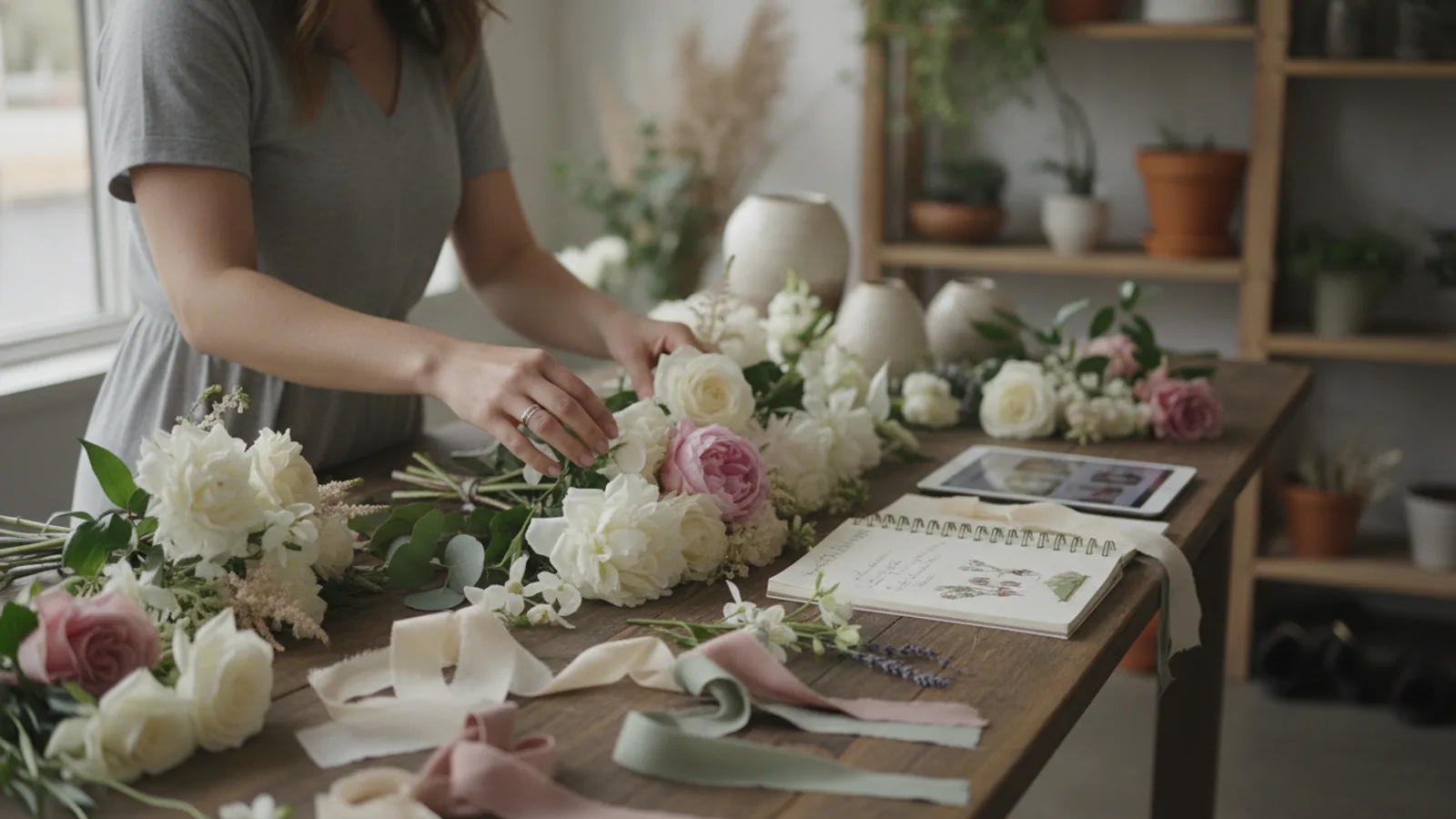
This is the fun part! Start collecting images that you’re drawn to. Pinterest and Instagram are fantastic resources, as are wedding magazines and blogs. As you save pictures, you’ll likely start to see a pattern emerge, revealing your personal wedding style. Are you drawn to soft, romantic arrangements, or do you prefer something more modern and architectural? Is your vibe rustic, classic, or bohemian?
Your wedding flowers shouldn't exist in a vacuum; they should feel like a natural extension of your overall theme. Consider your venue’s character—a rustic barn calls for a different floral style than a grand hotel ballroom. Think about the colours you've already chosen for your attire and stationery. Your flowers should complement these elements to create a cohesive and harmonious look.
Research and Choose Your Florist
Finding the right florist is like finding any other key wedding supplier—it’s about finding someone whose work you love and who you connect with personally. Start by looking for florists in your venue's area. Ask for recommendations from your venue coordinator, recently married friends, or your photographer.
Browse their online portfolios and social media accounts. Do you love their style? Do they showcase a consistent quality of work? Read reviews from past couples to get a sense of their professionalism and service. Once you have a shortlist of two or three florists, reach out to check their availability for your date and schedule a consultation.
Understand Seasonality and Colour Palettes
One of the most valuable pieces of advice is to embrace seasonal flowers. Choosing blooms that are naturally available at the time of your wedding has several key benefits: they are at their most beautiful and robust, they are more environmentally friendly, and they are significantly more budget-friendly than trying to import flowers from across the world.
A good florist will guide you on what’s best each season in the UK:
- Spring: Ranunculus, anemones, tulips, daffodils, hyacinths, and lilac.
- Summer: Peonies, roses, sweet peas, hydrangeas, delphiniums, and cornflowers.
- Autumn: Dahlias, chrysanthemums, asters, chocolate cosmos, and beautiful berries.
- Winter: Hellebores, anemones (again!), amaryllis, jasmine, and festive foliage like eucalyptus and pine.
During your consultation, use your colour swatches to discuss the palette. Your florist can suggest beautiful combinations and introduce you to flowers you may not have even heard of.
Attend Your Floral Consultation
This is where your vision starts to become a reality. Come to the meeting prepared with your budget, mood board, venue photos, and fabric swatches. This gives your florist all the information they need to start designing.
Be prepared to ask questions, too. Good things to clarify include:
- Have they worked at your venue before?
- What is their design process like?
- What is included in their pricing (e.g., delivery, setup, vase hire, collection)?
- Can they suggest ways to maximise the budget?
The most important thing is to be open-minded. A professional florist has a wealth of knowledge. If your first-choice flower isn't available or is out of budget, trust them to recommend a stunning alternative that will capture the same feel.
Review the Proposal and Sign the Contract
After your consultation, the florist will send you a detailed proposal. This document should be more than just a single price; it should be an itemised breakdown of every floral piece you discussed. Check it carefully to ensure it includes:
- A list of all arrangements with descriptions of size, style, and key flowers/colours.
- Details on containers and vases.
- A clear breakdown of all costs, including VAT.
- Information on delivery, setup, and collection logistics and fees.
- The payment schedule and their terms and conditions.
Make sure everything aligns with your conversation. If anything is unclear or not quite right, don't hesitate to ask for clarification or amendments. Once you are completely happy with the proposal, you’ll sign the contract and pay a deposit to formally book their services and secure your wedding date in their calendar.
Quick Reference
| Situation | Use this | Why |
|---|---|---|
| You're on a tight budget | Seasonal blooms, abundant foliage, and re-purposed arrangements | This strategy maximises visual impact for a lower cost. Greenery is lush, beautiful, and budget-friendly. |
| You want a high-impact, statement look | A large installation (like an arch) and one or two "hero" flowers | This creates a memorable focal point for photos and guest experience, making the most of your investment. |
| Scent is very important to you | Roses, sweet peas, stocks, freesias, or jasmine | These blooms add a beautiful, subtle fragrance that enhances the atmosphere and creates lasting memories. |
| Your venue is modern and minimalist | Architectural flowers like orchids, calla lilies, or anthuriums | Their clean lines and sculptural shapes complement modern spaces perfectly, adding elegance without clutter. |
Common Problems When You Choose Wedding Flowers
Even with the best planning, a few questions or concerns can pop up. Here’s how to handle them.
Problem: Your dream flower is out of season.
Solution: It's a common scenario to have your heart set on fluffy peonies for an October wedding, only to learn they're a summer bloom. Don't despair! Trust your florist. Explain the look and feel you love about that flower—is it the colour, the shape, the romantic texture? They can suggest excellent seasonal alternatives. For example, a Juliet garden rose or a double-petal ranunculus can provide a very similar soft, ruffled effect to a peony.
Problem: The first quote is significantly over your budget.
Solution: Don't panic or feel awkward. Be transparent with your florist. A simple, "This is a bit more than we were hoping to spend, are there any areas where we could make some savings?" is all that's needed. They can then suggest adjustments, such as reducing the size or complexity of table centrepieces, swapping a premium flower for a more affordable one, or using more lush greenery to fill out arrangements.
Problem: You feel you don't know enough about flowers.
Solution: You don't need to be a botanical expert to have beautiful wedding flowers. In fact, most couples aren't! That's what you hire a professional for. Focus on communicating the overall feeling, style, and colour palette you want. Your inspiration board is your most powerful tool. A good florist will be able to translate your vision into a concrete floral design, introducing you to the perfect blooms along the way.
Advanced Tips for Choosing Wedding Flowers
Ready to take your floral design to the next level? These ideas add a layer of thoughtfulness and personal flair.
- Incorporate Personal Meaning: For a truly unique touch, consider the traditional "language of flowers." Including a bloom that symbolises something special to you as a couple—like myrtle for love and marriage, or rosemary for remembrance—can add a beautiful, hidden meaning to your bouquet.
- Don't Forget Texture and Foliage: The most stunning arrangements have depth and dimension. Talk to your florist about incorporating different textures. Mix soft, classic blooms with interesting elements like spiky eryngium (sea holly), delicate ferns, trailing jasmine, or the silvery leaves of eucalyptus. Foliage is not just a filler; it's a key design element.
- Consider the Scent Journey: Think about how fragrance can enhance your day. A beautifully scented bridal bouquet with roses or sweet peas will be a delight every time you lift it. For tables, opt for more subtle scents like herbs (mint, rosemary) so they don't overwhelm the food. Avoid heavily perfumed flowers like lilies in centrepieces.
- Gift Your Flowers: Plan for your flowers to have a life after the wedding. Designate a friend or family member to help you. You can give centrepieces to special guests to take home, or arrange to have the flowers delivered to a local hospice or care home the next day to spread the joy.
How To Choose Wedding Flowers FAQ
How far in advance should I book my wedding florist?
What percentage of my wedding budget should be for flowers?
Is it cheaper to use artificial flowers?
Do I need to provide the vases for my centrepieces?
What flowers should I avoid?
Final Checklist for Choosing Wedding Flowers
You're almost there! Use this final checklist to ensure you've covered all the key stages in choosing your perfect wedding flowers.
- Set a realistic and comfortable floral budget.
- Create an inspiration or mood board that reflects your wedding style.
- Make a comprehensive list of every floral item you need.
- Research and shortlist 2-3 local florists whose work you admire.
- Book your consultations at least 9 months before the wedding.
- Go to your consultation prepared with your budget, board, and questions.
- Discuss seasonality, colour, and style with your chosen florist.
- Thoroughly review the itemised proposal and ask for any necessary adjustments.
- Sign the contract and pay the deposit to secure your wedding date.
- Confirm all delivery, setup, and collection timings with your florist and venue.